Aging at home can feel comforting, especially when your parent or grandparent loves their own kitchen, favorite chair, and familiar Brooklyn block. Still, daily life can get lonely or harder with time. That’s where a companion caregiver can make a real difference. For families looking for trusted support, Elderly care can help older adults stay safer, more connected, and more comfortable at home.
Many families first notice the need for help in small ways. Maybe Mom stops going downstairs for mail. Maybe Dad forgets lunch because no one is there to remind him. I’ve seen families feel relieved when they realize care does not always need to start with medical help. Sometimes, what a person needs most is steady company, simple support, and a kind person who shows up.
Table of Contents
Quick Facts About Companion Care
| Topic | Simple Explanation |
| Main purpose | Social support, daily routine help, and safety check ins |
| Best for | Older adults who are mostly independent but need company or light help |
| Not the same as | Skilled nursing or medical care |
| Common setting | Private homes, apartments, senior housing, and family homes |
| Typical duties | Conversation, errands, meal reminders, light housekeeping, and appointments |
| Good fit in Brooklyn | Seniors living alone, adult children with busy schedules, and families needing flexible home support |
What Is a Companion Caregiver?
A companion caregiver is a non medical care professional who supports an older adult with daily living, social connection, routine tasks, and emotional comfort. The goal is not to treat illness. The goal is to help someone feel less alone and more supported during normal daily life.
Think of a companion caregiver as a trusted helping hand. They may sit and talk over tea, walk with a senior around the block, prepare a light meal, or remind them about an appointment. In Brooklyn, this kind of help can be especially useful for older adults who live alone in apartments or multi family homes.
A care companion for the elderly can also help families feel calmer. You may not be able to visit every day after work, school pickups, subway delays, and life in New York. Having someone reliable check in can bring real peace of mind.
Why Companion Care Matters More Than Many Families Think
Loneliness is not a small issue. It can affect mood, appetite, sleep, memory, and overall well being. I’m always a little surprised by how much a simple visit can change someone’s day. A warm conversation and a short walk can lift a person’s mood in a way that feels almost immediate.
AARP reported in 2024 that 75 percent of adults age 50 and older want to stay in their current homes as they age, while 73 percent want to remain in their communities. That makes home based support more important than ever.
Brooklyn also has a large older adult population. The U.S. Census Bureau QuickFacts page for Kings County reports that 16.4 percent of residents are age 65 and older. For many of these families, a companion caregiver may help bridge the gap between full independence and more intensive care.
Common Duties of a Companion Caregiver
The duties of a companion caregiver depend on the senior’s needs, health, home setup, and family routine. Most tasks are practical, social, and supportive.
Common duties include:
- Friendly conversation and emotional support
- Reading together or playing simple games
- Going for short walks when safe
- Helping with hobbies and light activities
- Meal planning and simple meal preparation
- Medication reminders, when allowed by care rules
- Appointment reminders
- Help with errands and grocery lists
- Light housekeeping, such as dishes or tidying common areas
- Laundry support
- Escorting to appointments or community activities
- Updating family members about concerns
- Watching for changes in mood, appetite, energy, or routine
A companion caregiver does not usually provide clinical care. They do not replace a doctor, nurse, therapist, or emergency support. This distinction matters because families sometimes expect one care role to cover everything.
What Companion Care Does Not Usually Include
This is where families should be careful. A companion caregiver is not always the right choice for every situation.
Companion care may not include:
- Wound care
- Injections
- Medical diagnosis
- Physical therapy
- Complex medication management
- Heavy lifting
- Full personal care unless included in the care plan
- Around the clock supervision unless scheduled that way
If your loved one has advanced dementia, serious fall risk, complex medical needs, or needs hands on personal care many times a day, you may need a higher level of home care. That does not mean companion care is useless. It just means the care plan must match the real need.
When Do You Need a Companion Caregiver?
Many families wait too long because they think care is only needed after a major health event. In real life, support often helps most when it starts earlier.
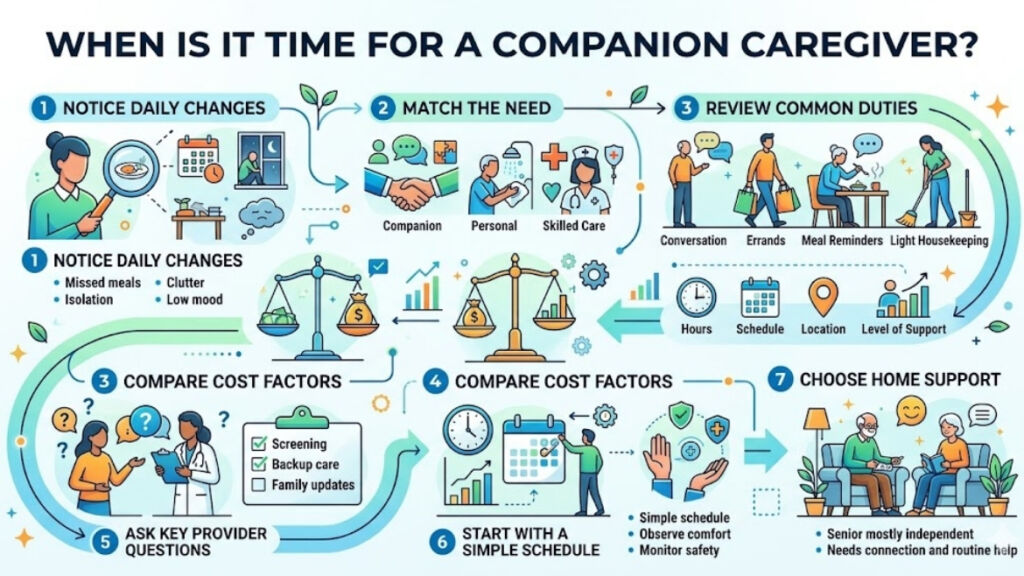
You may need a companion caregiver if you notice:
- Your loved one spends most days alone
- They have stopped enjoying hobbies or social activities
- They forget to eat meals or drink too little water
- Their home looks more cluttered than usual
- They miss appointments or avoid going out
- They seem sad, worried, or withdrawn
- They call family often because they feel lonely
- They have mild memory changes, but still live mostly independently
- You feel guilty because you cannot visit as much as you want
- They need encouragement to keep a healthy daily routine
One small moment can make the need clear. A daughter might stop by after work and find unopened mail stacked near the door. Nothing dramatic happened, but it still feels concerning. That’s often when a companion caregiver becomes a smart next step.
Companion Care Cost in Brooklyn and New York
Costs vary based on hours, level of support, schedule, agency policies, and whether care is needed on weekdays, evenings, weekends, or holidays. Families should always request a clear quote before choosing a provider.
CareScout reported that the national median hourly rate for non medical caregiver services was 35 dollars in 2025. A New York focused 2025 home care cost guide estimated Brooklyn home health aide rates at about 27 dollars to 32 dollars per hour, with monthly care around 5,200 dollars to 6,200 dollars for 44 hours per week.
These figures are helpful, but they are not a final price for every family. Companion care may cost less or more depending on the care plan. Live in care, overnight help, short shifts, and last minute scheduling can change the total.
What Affects the Cost?
The price of a companion caregiver can depend on several real world details.
Key cost factors include:
- Number of hours per week
- Minimum shift length
- Daytime or overnight scheduling
- Weekend or holiday care
- Language preferences
- Transportation needs
- Level of supervision required
- Whether light personal care is included
- Agency screening and caregiver training
- Location within Brooklyn or nearby areas
It’s wise to compare more than the hourly rate. A cheaper option can become stressful if scheduling is unreliable. A slightly higher rate may feel worth it when communication is clear and the caregiver is consistent.
Companion Care Versus Other Care Options
Not every family needs the same type of support. Some seniors only need social visits. Others need hands on help. The right choice depends on safety, independence, and family availability.
| Care Option | Best For | Strengths | Limitations |
| Polish Home Services | Brooklyn families needing home based elderly support and companionship | Local focus, flexible support, natural fit for families who want help at home | May not be the best fit for advanced medical needs that require skilled nursing |
| Independent private caregiver | Families who already know and trust a caregiver | May feel personal and flexible | Screening, backup coverage, taxes, and supervision may fall on the family |
| Adult day care program | Seniors who can leave home and enjoy group activities | Structured social time and lower daytime cost in some cases | Not ideal for seniors who dislike group settings or need support at home |
| Assisted living | Seniors needing daily support in a residential setting | Meals, activities, and staff availability | Higher cost, major lifestyle change, and not everyone wants to leave home |
How Polish Home Services Can Help Brooklyn Families
Polish Home Services supports families who want dependable elderly care at home. For many Brooklyn households, this can mean help with companionship, daily routine, social support, and practical assistance that keeps an older loved one more comfortable in familiar surroundings.
What I like about this type of support is how personal it can feel. A senior may not need a big lifestyle change. They may just need someone to come by, talk, help with lunch, and make the day feel less empty. That simple rhythm can be powerful.
Still, it is important to be honest. Polish Home Services may be a strong fit for families seeking non medical elderly support and companionship at home. If your loved one needs hospital level care, complex clinical care, or emergency supervision, you should speak with a medical professional and ask about skilled care options.
Questions to Ask Before Hiring a Companion Caregiver
Before you hire a companion caregiver, ask practical questions. Clear answers protect your loved one and help avoid confusion later.
Good questions include:
- What duties are included in companion care?
- Can the caregiver help with errands or appointments?
- Is there a minimum number of hours per visit?
- What happens if the regular caregiver is unavailable?
- Are caregivers screened and trained?
- How are care updates shared with family?
- Can the care plan change over time?
- What services are not included?
- How is pricing explained?
- Who should the family call with concerns?
Do not feel awkward asking these questions. A good care provider should expect them.
Signs Your Loved One May Need More Than Companion Care
A companion caregiver can be wonderful, but some situations call for more support. You may need personal care, home health care, or skilled nursing if your loved one:
- Falls often or has unsafe walking patterns
- Cannot bathe, dress, or use the bathroom safely
- Leaves the stove on or wanders outside
- Has unmanaged medications
- Has serious memory loss
- Needs wound care or injections
- Has sudden behavior changes
- Requires transfer help from bed to chair
- Needs constant supervision
When in doubt, start with a care assessment. It can help you avoid under supporting your loved one or paying for services they do not need.
Why Brooklyn Families Often Choose Home Companion Care
Brooklyn has its own rhythm. Families may live nearby but still feel stretched thin. Work schedules, traffic, subway delays, caregiving stress, and family duties can pile up quickly.
That’s why senior companion services NYC can be helpful for adult children who want support without moving their loved one out of the home. A companion caregiver can help preserve routine while adding a layer of care and connection.
For many seniors, staying at home is not just a preference. It is emotional. Their home holds memories, neighbors, favorite stores, and daily habits. When care is planned well, the home can remain a safe and meaningful place.
Practical Tips for Families Starting Companion Care
Starting care can feel sensitive. Some older adults resist help because they worry about losing independence. A gentle approach works better than pressure.
Try these steps:
- Start with a short visit schedule
- Present care as support, not control
- Let your loved one share preferences
- Match the caregiver to personality and language needs
- Keep the first few visits simple
- Ask for feedback after each visit
- Review the care plan after a few weeks
- Watch for mood, appetite, and routine changes
You might say, “Let’s try someone for a few hours a week so you have help with errands and company.” That feels much softer than saying, “You need care now.”
Final Thoughts on Choosing a Companion Caregiver
A companion caregiver can help an older adult feel seen, supported, and less alone. That matters more than many people realize. It can also help family members feel relieved because someone caring and reliable is checking in.
For Brooklyn families, the right support should feel practical, respectful, and personal. Look at your loved one’s daily routine, safety, mood, and social connection. Then choose care that fits the real situation. If staying at home is the goal, Elderly care is a natural place to learn more about supportive elderly care options in Brooklyn.