
If you are caring for an aging parent, spouse, grandparent, or neighbor in Brooklyn, you may already know that love does not make caregiving easy. It can be meaningful and exhausting at the same time. Learning caregiver burnout symptoms can help you notice when the pressure is becoming too much before your own health starts to suffer. Families who need trusted in home support can also explore Polish Home Services as part of a realistic care plan.
Caregiver burnout happens when long stretches of emotional, physical, and mental strain leave you drained, detached, or unable to keep giving care in a healthy way. It does not mean you are selfish. It usually means you have been carrying too much for too long.
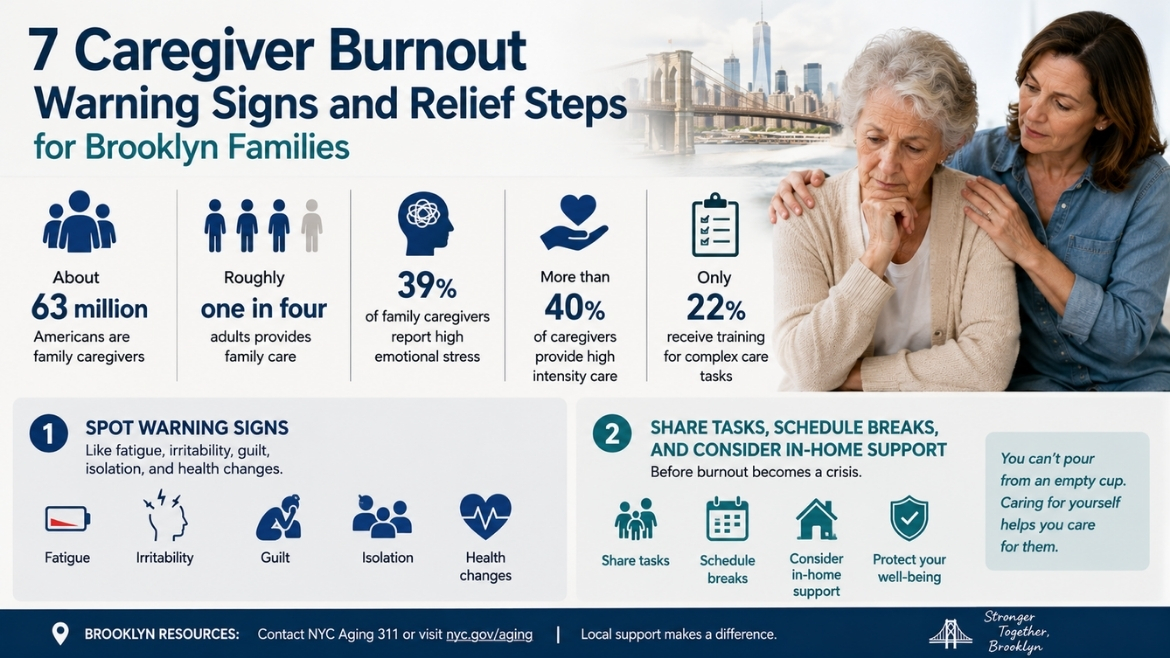
Across the United States, caregiver burnout is becoming an even bigger family issue in 2026. The latest national caregiving research from AARP and the National Alliance for Caregiving shows that about 63 million Americans are family caregivers, which is roughly one in four adults. The same research found that 39 percent of family caregivers experience high emotional stress, more than 40 percent provide high intensity care, and only 22 percent receive training for complex care tasks. In 2026, AARP also reported that family caregivers delivered 49.5 billion hours of care in 2024, with an estimated economic value of 1 trillion dollars.
Those numbers are impressive in one sense, but honestly, they are also a little heartbreaking. Behind every statistic is someone skipping lunch, missing sleep, or answering a phone call during work because a loved one needs help right now. For Brooklyn families, that pressure can feel even heavier when caregiving is mixed with work, rent, commuting, and daily household responsibilities.
Table of Contents
Busy Families: Why Caregiver Burnout Deserves Attention
| Core Issue | Reality / Example | Impact & Risk |
| Self-Reliance Trap | Thinking “I should do it all” or “no one else cares like me.” | Delaying support until completely worn down. |
| Cumulative Stress | Daily chores pile up (cooking, sorting pills, endless tasks). | Damages mood, sleep, patience, and relationships. |
| Safety Gap | Severe exhaustion and mental fatigue from non-stop care. | High risk of missing medication or clinical warning signs. |
Why caregiver burnout deserves attention
Many caregivers wait until they are truly worn down before they ask for help. That is understandable. Families often think, I should be able to do this. Or, no one else will care the way I do.
Still, caregiver burnout symptoms are not something to brush aside. Chronic stress can affect mood, sleep, appetite, patience, relationships, and decision making. It can also make caregiving less safe. A tired person is more likely to forget a dose, miss a warning sign, or snap during a hard moment.
A Brooklyn daughter might stop by her mother’s apartment after work, cook dinner, sort pills, answer mail, and then ride home feeling too wired to sleep. A son might spend Sunday doing laundry and grocery shopping for his father, then feel guilty for being annoyed when another request comes in Monday morning. These small moments build up.
The 7 warning signs families should not ignore
Below are seven common caregiver burnout symptoms families should watch for. One bad day does not mean burnout. A repeating pattern is what matters.
1. You feel tired even after resting
This is more than normal tiredness. You may sleep for hours and still wake up heavy, foggy, or tense. Your body feels like it never fully powers down.
When fatigue keeps returning, the care load may be too high. This can happen when you are helping with bathing, meals, transportation, cleaning, bills, medicine, and emotional support with little backup.
2. You are more irritable than usual
Maybe small things suddenly bother you. A repeated question feels unbearable. A spilled cup makes you angry. Then you feel guilty for reacting.
This is one of the caregiver burnout symptoms that families often notice late because irritability can seem like a personality problem. It is usually a stress signal. The caregiver is not failing. The situation needs more support.
3. You stop taking care of yourself
Skipped meals, missed doctor visits, no exercise, and poor sleep can become the new normal. You may keep telling yourself you will rest once things calm down.
The hard part is that things may not calm down without a plan. If your loved one has dementia, mobility issues, chronic illness, or frequent appointments, the care needs may grow. That is when family caregiver stress relief becomes a health need, not a luxury.
4. You feel numb, sad, or emotionally distant
Some caregivers expect burnout to feel like panic. Sometimes it feels like nothing. You may feel flat, disconnected, or unable to enjoy things that used to make you happy.
This can be surprising and even scary. You love your family member, but you may also feel trapped. Both feelings can exist at the same time. If sadness, hopelessness, or emotional numbness lasts, speak with a health professional or counselor.
5. You pull away from friends and family
At first, you cancel plans because your loved one needs you. Then you stop making plans at all. You may feel like nobody understands, or you may not have the energy to explain.
Isolation makes caregiver burnout symptoms worse. Human beings need connection, even during stressful seasons. A short walk with a friend, a phone call, or a support group can help you remember that you are more than the care schedule.
6. You feel resentful, then guilty
Resentment is one of the most uncomfortable parts of caregiving. You may think, why is this all on me. Then guilt comes right behind it.
Feeling resentful does not make you cruel. It often means the work is unfairly distributed. A family meeting may be needed. Sometimes paid help is needed too, especially when one person is carrying most of the daily tasks.
7. Your own health starts changing
Headaches, stomach issues, back pain, frequent colds, appetite changes, and racing thoughts can all be stress signals. You might also notice higher blood pressure or worsening chronic conditions.
When caregiver burnout symptoms affect your body, it is time to treat the situation seriously. Caregivers need care too. That sentence may sound simple, but many families feel relieved when someone finally says it out loud.
What to do when burnout signs appear
Start with a calm review of what is actually happening. Do not try to solve everything in one night.
- Write down every caregiving task you handle in a typical week
- Mark which tasks only you can do and which tasks someone else could do
- Ask relatives to choose specific jobs, not vague offers to help
- Talk with your loved one’s doctor about changing care needs
- Look into adult day programs, home care, meal delivery, transportation support, or local senior services
- Build rest into the schedule before you feel desperate
- Keep your own medical and dental appointments
- Consider counseling or a caregiver support group if guilt or sadness feels heavy
One practical move is to create a shared care calendar. Instead of asking a sibling to help more, ask them to handle Tuesday groceries, Thursday medicine pickup, or one weekend visit each month. Specific requests are easier to accept and track.
How Polish Home Services may help Brooklyn families
For many households, caregiver burnout symptoms appear when a loved one can still live at home but needs more daily support than one family member can provide. That is where Polish Home Services may be a useful fit.
The company describes in home elderly care, personal support, companionship, household help, meal assistance, reminders, and flexible care plans. Its site also notes a Brooklyn office, service across New York City communities, and care availability every day of the week. Families can review their elderly care services when exploring support for an aging loved one at home.
This type of help may be best when your loved one needs companionship, bathing support, light housekeeping, meal preparation, errands, routine reminders, or a steady caregiver presence. It may also help families create respite care for family caregivers, so the primary caregiver can rest, work, visit friends, or simply breathe.
Here is the honest limitation. Polish Home Services is not a replacement for emergency care, hospital level monitoring, physical therapy, skilled nursing ordered by a doctor, or complex medical treatment. If your loved one needs clinical care, the family should speak with a physician, hospital discharge planner, or licensed home health provider.
Family Communication: How to Talk with Family Members About Sharing the Load
| Focus Area | The Problem | Actionable Solution / Goal |
| Family Friction | Relatives say they are busy, live far, or think you’re exaggerating. | Bring facts, not accusations. Share the weekly task list. |
| Be Specific | Vague pleas for help usually get ignored. | Give clear “I need” tasks (e.g., pharmacy calls, Friday rides, nights off). |
| Clear Picture | Uncertainty about who will actually help. | If they still refuse, you know exactly what outside care to hire. |
How to talk with family members about sharing the load
Family conversations can get tense. Someone may say they are busy. Someone else may live far away. Another person may think you are exaggerating. I would be skeptical too if I only heard bits and pieces instead of seeing the full routine.
Bring facts, not accusations. Share the weekly task list. Explain what has changed. Say clearly what you need.
Try this approach:
- I need help with transportation on Fridays
- I need someone else to call the pharmacy each month
- I need two evenings off every week
- I need us to discuss paid help because the current plan is not working
- I need backup if I get sick
When people hear a specific request, they are more likely to respond. If they still do not help, you at least have a clearer picture of what outside support may be needed.
When to seek urgent help
Some caregiver burnout symptoms can wait for a planned appointment. Others need faster attention.
Reach out for urgent help if you feel you might harm yourself or someone else, if your loved one is unsafe at home, or if stress is causing serious sleep loss, panic, chest pain, confusion, or inability to function. Call emergency services if there is immediate danger.
For emotional support, speak with a doctor, therapist, faith leader, trusted friend, or local support organization. You do not need to prove you are struggling enough. Asking early is better than waiting until everything breaks.
Final thoughts
Caregiving can be one of the most loving things a person ever does, but it should not cost the caregiver their health. If you recognize caregiver burnout symptoms in your own life, take that as information, not failure. Start small, ask for specific help, speak with professionals, and create a safer rhythm for everyone involved. For Brooklyn families who want compassionate in home support while keeping an aging loved one comfortable at home, Polish Home Services may be a practical part of the relief plan.