


Good elder care helps an older adult stay safe, respected, comfortable, and involved in daily choices. It may include companionship, meal support, personal care, transportation, reminders, and help with regular routines. Families exploring elder care services should begin with the person’s actual needs rather than a general idea of what senior care should look like. A thoughtful plan protects independence while giving relatives welcome peace of mind. Care should support a person’s life, not take control of it.
Table of Contents
What Does Effective Elder Care Mean?
Effective elder care is respectful support that changes as a person’s needs change. It focuses on what an older adult can still do, where help is needed, and what creates the best quality of life.
Some people need only a few hours of companionship and help with errands. Others need daily support with bathing, dressing, meals, mobility, or household tasks. A smaller group needs skilled medical care from licensed clinical professionals.
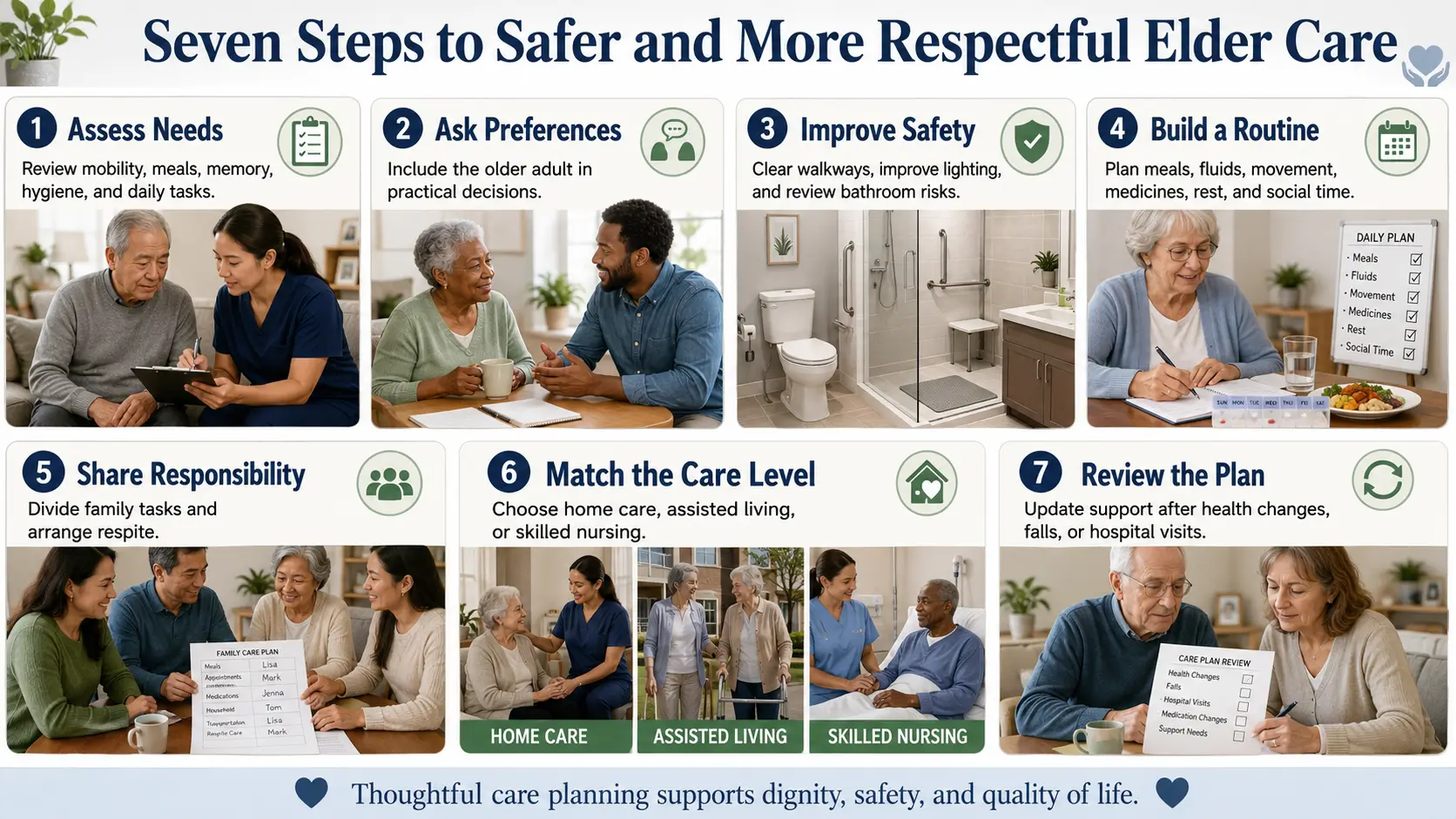
Strong plans are person centered. They consider health, mobility, memory, culture, routines, preferences, and family involvement. Review them after an illness, fall, hospital visit, or major life change.
Elder Care Quick Facts
| Topic | What It Means | Practical Action |
| Personal care | Help with bathing, dressing, grooming, and toileting | Protect privacy and ask permission before helping |
| Companion care | Conversation, shared activities, and social support | Plan regular visits and meaningful activities |
| Home safety | Reducing common risks in rooms and walkways | Improve lighting and remove loose clutter |
| Daily living support | Help with meals, shopping, laundry, and routines | Create a simple weekly schedule |
| Skilled medical care | Clinical services from licensed professionals | Ask a doctor which level of care is required |
Why Does Elder Care Matter More Than Ever?
America’s older population is growing quickly. The United States had 61.2 million people age 65 and older in 2024. That group represented 18.0 percent of the population and had grown 13.0 percent since 2020.
Living arrangements also affect care needs. The Administration for Community Living reported that about 28 percent of community dwelling adults age 65 and older lived alone in 2023. Living alone does not automatically mean someone is unsafe. It does mean families should watch mobility, social contact, nutrition, medication routines, and emergency planning.
Fall prevention deserves special attention. The Centers for Disease Control and Prevention reports that more than 14 million older adults, or about one in four, report a fall each year. About 37 percent of those who fall report an injury needing medical treatment or limiting activity for at least one day. That equals an estimated nine million fall injuries.
These numbers can feel worrying. Still, it is reassuring that many risks can be reduced through simple checks, better routines, and timely support.
How Can Families Assess an Older Adult’s Needs?
Start with observation, conversation, and facts. Avoid making a major decision after one difficult day. Look for patterns over several days or weeks.
A familiar moment happens in many homes. A daughter notices untouched meals, unopened mail, and a missed appointment card. Her father says he is fine. No single sign proves that full time care is needed, but the pattern suggests an assessment is wise.
Review these areas:
- Personal hygiene and dressing
- Walking, transfers, and stairs
- Meal preparation and hydration
- Medication organization
- Memory and judgment
- Housekeeping and laundry
- Transportation and shopping
- Social contact and mood
- Bills, mail, and appointments
Ask what feels difficult and what help would feel acceptable. A doctor, social worker, occupational therapist, or care manager can help with complex concerns.
How Do You Build a Simple Daily Care Routine?
A good routine should make life easier without controlling every hour. Keep it predictable while leaving room for choice. Prioritize meals, fluids, medication reminders, personal care, movement, sleep, and social time.
A useful daily plan might include:
- A calm morning check and breakfast
- Personal care based on preferences
- Light movement approved by a clinician
- Medication reminders from written instructions
- A balanced lunch and regular fluids
- A phone call, visit, hobby, or outdoor time
- An evening meal and bedtime safety check
Rest and privacy matter. The goal is support, not constant supervision unless a clinical assessment requires it.
What Home Safety Changes Have the Most Value?
Home safety often improves through small changes. Walk through the home at the same pace as the older adult. Notice what is hard to reach, hard to see, or easy to trip over.
Focus on these actions:
- Clear cords, bags, and loose items from walkways
- Improve lighting near stairs, halls, and bathrooms
- Add secure handrails where needed
- Place common items within easy reach
- Check that shoes fit well and have stable soles
- Keep emergency numbers easy to find
- Ask a professional about bathroom supports
Never assume that a grab bar, walker, or mobility aid is correct because it looks useful. Poor placement or the wrong device can create another risk. An occupational therapist or physical therapist can give advice based on the person’s movement and home layout.
How Should Families Handle Meals, Medicines, and Appointments?
Food support should suit the person’s health needs and preferences. Watch for chewing trouble, skipped meals, unexpected weight changes, or dehydration.
Medication support needs clear boundaries. A caregiver may offer reminders, but administration rules vary. Follow the clinician’s instructions and confirm what the caregiver may legally do.
Keep one current list of medicines, doses, timing, allergies, pharmacy details, and prescribing clinicians. Update it after every change. It is a relief when everyone uses the same accurate information.
Use a shared calendar for appointments. With permission, one trusted person can attend and take notes without excluding the person receiving care.
How Can Caregivers Protect Dignity and Independence?
Dignity grows through everyday behavior. Knock before entering. Explain what you are doing. Offer choices. Speak directly to the older adult instead of talking around them.
Small choices matter. Let the person choose shower times, clothes, meals, music, and activities whenever possible. If an error is harmless, patience may be more valuable than being right. When memory changes affect safety, use calm reminders instead of arguments.
Respect cultural and language preferences too. A caregiver who understands familiar foods, customs, faith practices, or communication styles may help the person feel more at ease. It is honestly impressive how much trust can grow from one respectful conversation and a familiar routine.
How Can Family Caregivers Prevent Burnout?
Family care can be meaningful and exhausting. Burnout may appear as poor sleep, missed work, irritability, trouble concentrating, withdrawal, or guilt about needing a break.
Respite is not abandonment. It is part of responsible planning. Share tasks among relatives when possible. Use adult day programs, companion care, meal services, transportation support, or planned home care visits. A family member who rests can usually provide safer and kinder support.
Create a backup plan listing who can step in, where documents are stored, and whom to call after a fall or sudden illness.
When Is Professional In Home Care a Good Fit?
Professional in home care can work well when an older adult wants to remain at home and needs help with everyday activities, companionship, organization, or regular supervision. It may also help families who live far away or cannot cover every shift.
Polish Home Services states that it offers personalized in home support, companionship, help with daily routines, and availability at all hours, including holidays. Its site also says it serves families across Brooklyn, Queens, Manhattan, Williamsburg, Greenpoint, and nearby New York City communities. Families can review Polish Home Services for company and contact details.
The best fit is a senior who wants familiar surroundings and needs dependable personal support rather than continuous hospital level treatment. A consultation should clarify tasks, schedules, caregiver matching, fees, backup coverage, and complaint procedures.
The limitation is important. Polish Home Services is not a hospital or skilled nursing facility. Its own guidance notes that people with advanced conditions requiring continuous doctor supervision or intravenous treatment may need a nursing facility or another clinical setting.
How Do Elder Care Options Compare?
| Care Option | Setting | Best Fit | Main Strength | Important Limitation |
| Polish Home Services | The senior’s own home | People needing personal support, companionship, and help with routines | Familiar surroundings and personalized assistance | Not a substitute for continuous skilled medical care |
| Independent private caregiver | The senior’s own home | Families wanting direct scheduling and a personal arrangement | Flexible relationship and routine | The family may manage screening, backup coverage, and oversight |
| Assisted living community | A private room or apartment in a shared community | People wanting meals, activities, and daily support nearby | Social contact and staff access | Less privacy and individual attention than some home arrangements |
| Skilled nursing facility | A licensed residential medical setting | People with complex health needs or frequent nursing requirements | Clinical supervision and nursing services | Less independence and a more institutional setting |
What Questions Should You Ask Before Hiring Care?
A careful interview protects everyone. Ask:
- What services are included, and which are excluded?
- How are caregivers screened and trained?
- Who supervises the care plan?
- What happens if the regular caregiver is absent?
- How are schedule changes and complaints handled?
- What are the rates and minimum visit times?
- Are evening, weekend, or holiday rates different?
- How will the family receive updates?
Meet the caregiver before regular visits begin when possible. Notice how they speak with the older adult. Skill, respect, and patience all matter.
When Should a Family Seek Medical or Emergency Help?
Home care does not replace emergency services or medical evaluation. Call emergency services for severe chest pain, serious breathing difficulty, sudden weakness on one side, major bleeding, loss of consciousness, or a severe fall injury.
Contact a clinician promptly for new confusion, repeated falls, sudden walking changes, major appetite loss, medication concerns, or rapid decline in daily function.
For complex needs, ask whether home health, physical therapy, occupational therapy, hospice, palliative care, or skilled nursing is appropriate. The answer depends on diagnosis, goals, safety, and the required level of clinical care.
FAQs
Q1. What Is the Main Goal of Elder Care?
The main goal is to support safety, dignity, comfort, and the highest practical level of independence. The plan should reflect the person’s health, preferences, and home environment.
Q2. How Do I Know When an Older Parent Needs More Help?
Look for repeated missed meals, medication confusion, falls, poor hygiene, unopened mail, isolation, unsafe driving, or trouble managing household tasks. A pattern deserves attention.
Q3. Can Elder Care Be Provided for Only a Few Hours?
Yes. Many families begin with short visits for companionship, meals, errands, personal care, or respite. The schedule can expand as needs change.
Q4. Is In Home Care the Same as Home Health Care?
Not always. In home care often means personal support and help with daily activities. Home health care usually means skilled services ordered by a clinician and provided by licensed health professionals.
Q5. How Often Should a Care Plan Be Reviewed?
Review it after any fall, hospital visit, new diagnosis, medication change, or noticeable decline. Without a major event, review it every few months to identify changes early.
Final Thoughts
Effective elder care starts with listening. It grows through safe routines, respectful communication, reliable support, and honest decisions about what the family can manage. Some seniors need light help, while others need daily assistance or skilled medical supervision. The right plan protects dignity without ignoring risk. Families considering professional support can explore personalized elder care from Polish Home Services and discuss whether in home assistance matches their loved one’s present needs.

