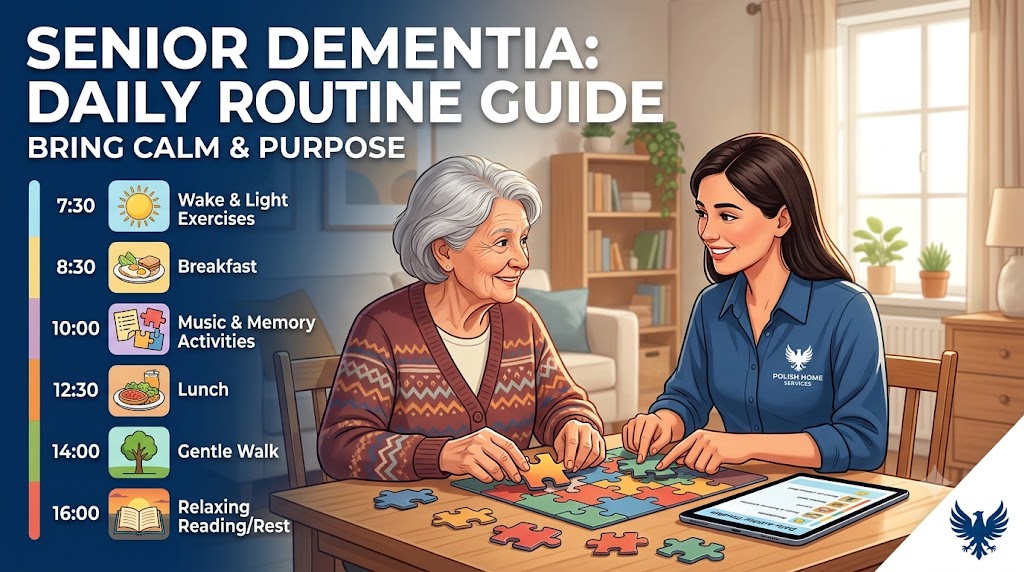
Caring for a loved one with dementia or Alzheimer’s disease is a journey paved with deep love, but it also brings silent struggles that only a family caregiver truly understands. Watching a parent or spouse navigate cognitive decline can feel like watching a familiar landscape slowly change before your eyes.
[cite: 1]On difficult days, simple tasks—like getting dressed or eating breakfast—can turn into exhausting battles of confusion and anxiety.
[cite: 1]According to global health data, over 55 million people worldwide live with dementia, a figure expected to rise to 78 million by 2030. Behind these stark statistics are real families, real heartbreak, and real exhaustion.
[cite: 1]If you are feeling overwhelmed, please know this: you do not have to rewrite their entire world to bring peace back into it. One of the most powerful, evidence-based ways to reduce anxiety, minimize behavioral changes, and restore a sense of dignity to your loved one is by establishing a structured, predictable daily routine.
[cite: 1]At Polish Home Services, we believe that aging is a beautiful gift, and that every individual deserves to live with comfort, heart, and soul. Let’s explore how you can craft a gentle, loving daily routine tailored to your loved one’s unique spirit.
[cite: 1]Why Structure Matters: The Neurology of Comfort
[cite: 1]Dementia progressively strips away the brain’s ability to plan, organize, and process abstract concepts. When the world stops making logical sense, a predictable environment becomes an emotional safety net.
[cite: 1]Without a stable routine, a person experiencing memory loss faces constant cognitive friction. They don’t know what is coming next, which triggers the brain’s “fight or flight” mechanism. This frequently manifests as agitation, resistance, or the stressful phenomenon known as sundowning syndrome—a state of increased confusion and restlessness that occurs in the late afternoon and evening.
[cite: 1]Conversely, a thoughtful daily schedule utilizes emotional memory and muscle memory. Even when explicit memories fade, the comfort of a familiar cadence remains deeply rooted in the heart. Structure reduces decision fatigue for both the senior and the caregiver, transforming a chaotic day into a series of calm, meaningful moments.
[cite: 1]Sample Master Schedule: A Template for Balance
[cite: 1]| Time Block | Core Focus | Sample Activities | Caregiver Goal |
|---|---|---|---|
| Morning (7:30 AM – 11:30 AM) | High Energy & Hygiene | Grooming, brain-healthy breakfast, stretching, or short outdoor walks. | Capitalize on peak cognitive reserves and clarity. |
| Midday (11:30 AM – 3:30 PM) | Connection & Nutrition | Main lunch meal, sorting objects, folding laundry, listening to classic music. | Maintain physical mobility and prevent midday boredom. |
| Late Afternoon (3:30 PM – 6:30 PM) | Calming Transition | Drawing blinds, turning on warm lights, quiet reading, or gentle puzzles. | Minimize sensory overload to prevent sundowning syndrome. |
| Evening (6:30 PM – 9:30 PM) | Wind-Down & Sleep | Light dinner, warm bath, lavender lotion hand massage, soft melodies. | Signal to the nervous system that it is safe to sleep. |
The Step-by-Step Guide to Implementing the Routine
[cite: 1]When building your care plan out in real life, focus on a sequential flow rather than rushing strictly by the clock.
[cite: 1]Assess Peak Energy Windows
Observe your loved one for a few days without enforcing rules. Note down exactly when they are most alert, when they get irritable, and when their energy dips. Build demanding tasks (like bathing) during their highest-energy windows.
Simplify the Physical Environment
Remove visual clutter that causes confusion. Lay out clothing options one single piece at a time. Label drawers with simple pictures or text prompts to encourage independent navigation.
Introduce Anchor Activities
Fix your meal times and wake-up times first. These act as psychological “anchors” for the senior. Once these times are consistent, gently layer in hobbies, exercise, and rest periods around them.
Evaluate and Tweak
Dementia progresses over time. Review the schedule weekly. If a previously loved hobby now causes frustration, simplify it or replace it with a lower-stress alternative like sensory touch blankets.
The Golden Rules of Dementia Care Scheduling
[cite: 1]To ensure your routine feels less like a clinical schedule and more like a loving rhythm, embrace these core principles:
[cite: 1]- Flexibility Over Perfection: If your loved one resists an activity, step back and try again later. Forcing a schedule destroys the sense of safety you are trying to build; peace always matters more than checking a box.
- Involve Them in the Process: Never do for them what they can still do with you. Let them hold the towel during grooming, fold simple pillowcases, or stir a plastic bowl. Cultivating purpose fosters deep internal dignity.
- Simplify Communication:
- Use short, direct sentences.
- Maintain gentle, level eye contact.
- Always speak in a calm, reassuring, low tone of voice.
- Embrace Productive Repetition: Repeating actions or questions offers comfort to an anxious mind. If looking at the same photo album three times a day brings them emotional peace, let it be a core part of their schedule.
Balancing Act: When to Seek Professional Support
[cite: 1]There is a profound, unspoken weight that comes with being a primary family caregiver. Studies show that close to 40% of family caregivers of people with dementia experience clinical depression or severe burnout.
[cite: 1]Choosing to bring professional care into your home is not an admission of defeat; it is an act of deep, protective love. It ensures that your senior receives the dedicated, expert stimulation they need while allowing you to reclaim your essential role as a daughter, son, or spouse.
[cite: 1]In-Home Care vs. Institutional Facilities
[cite: 1]- Familiar Environment: In-home care keeps your loved one surrounded by their own memories, reducing the spatial disorientation caused by moving to a nursing home.
- One-on-One Attention: A dedicated professional monitors behavioral shifts in real time, adapting the daily schedule immediately based on the senior’s mood.
- Consistency of Care: Seeing the same friendly face daily builds deep trust, which is vital for patients experiencing progressive cognitive decline.
Restoring Peace to Your Home with Polish Home Services
At Polish Home Services, we understand that true memory care requires a beautiful blend of professional skill and deep emotional empathy. Serving Williamsburg, Greenpoint, Manhattan, Queens, and Brooklyn since 1989, we treat your family exactly like our own.
Our agency specializes in providing highly trained, thoroughly vetted caregivers—predominantly from Poland and Eastern Europe—who bring an exceptional work ethic, cultural warmth, and deep respect for the elderly. Whether your family needs a few hours of afternoon companion care, assistance with daily nutrition, or dedicated 24-hour live-in care professionals, we work closely with you to craft a deeply personalized care plan.
Let us help you lift the burden of constant worry, so you can focus on creating beautiful, meaningful memories with the person you love.
Give your family the peace of mind they deserve.
Contact Polish Home Services Today